
All In
Beyond Survival in Downeast Maine

It is trivia night in the easternmost city in the U.S. In the wine bar peering over the harbor, people in sweaters and sport coats press their backs against the brick walls. The last time I saw a room of blazers was hundreds of miles southwest of here and the governor was in attendance, which is to say this is not typical downeast Maine attire. Eastport is not just surviving winter–they are doing it in style.
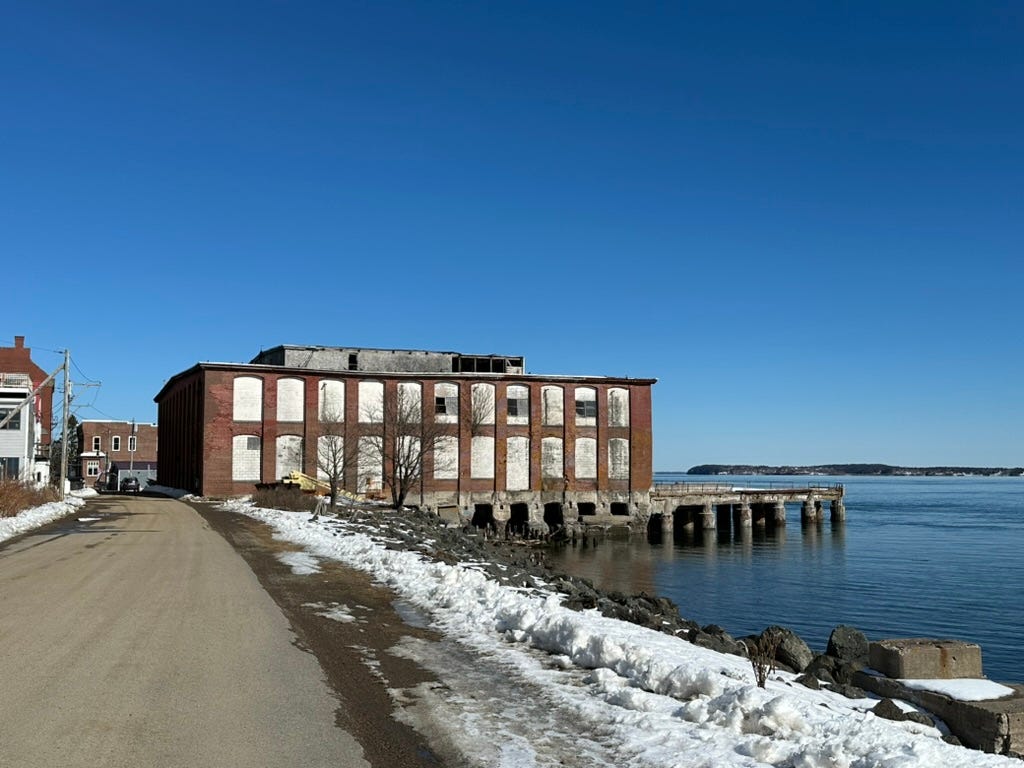
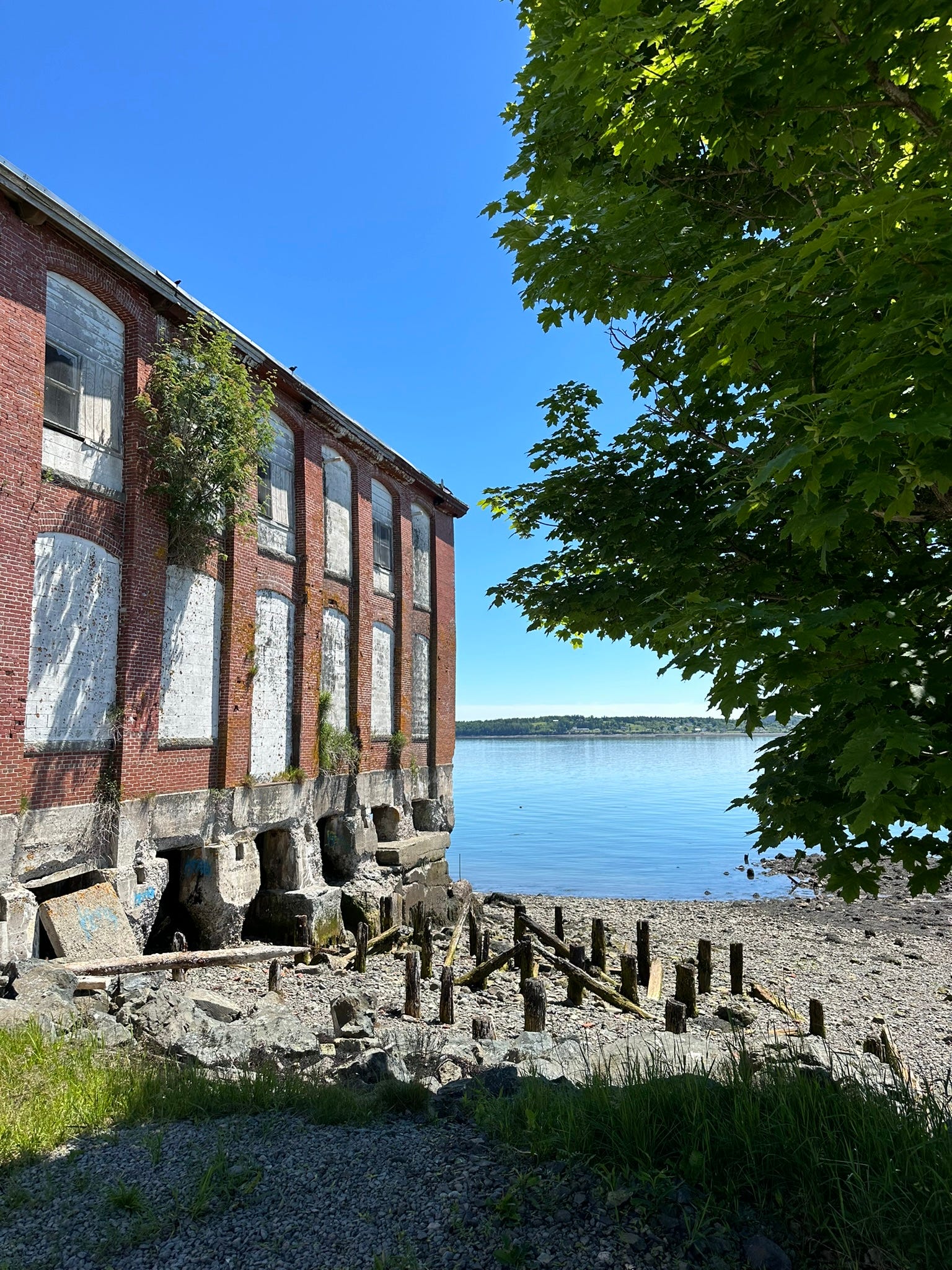
This stout building was laid with Maine brick around the time that Eastport was the second busiest port in the nation, sending grain and hay and potatoes and 5,000 cases of sardines out every week. All that is left of the canneries are these three-story Italianate buildings and just over a thousand residents. The last mill in the area ships paper pulp, but people keep dying in unsafe conditions there, leaving the town murmuring and wondering how long this can go on.
I am terrible at trivia, but came to Eastport to visit a friend, Jeanne, and learn more about what Eastport needs for planning and infrastructure projects. I feel a sense of awed commitment to this island community with twenty-foot tides, an industrial port and very few people. Even at the end of the line, even as the population ages and dwindles, the people are wily, tenacious and optimistic. The canneries are gone, but two women just bought the southernmost one to restore it. Downtown has a new bookstore and this wine nook amid a few established art galleries. The port director just submitted a grant proposal for $20 million. “And we have four bars open all winter,” Jeanne said, her eyes twinkling.
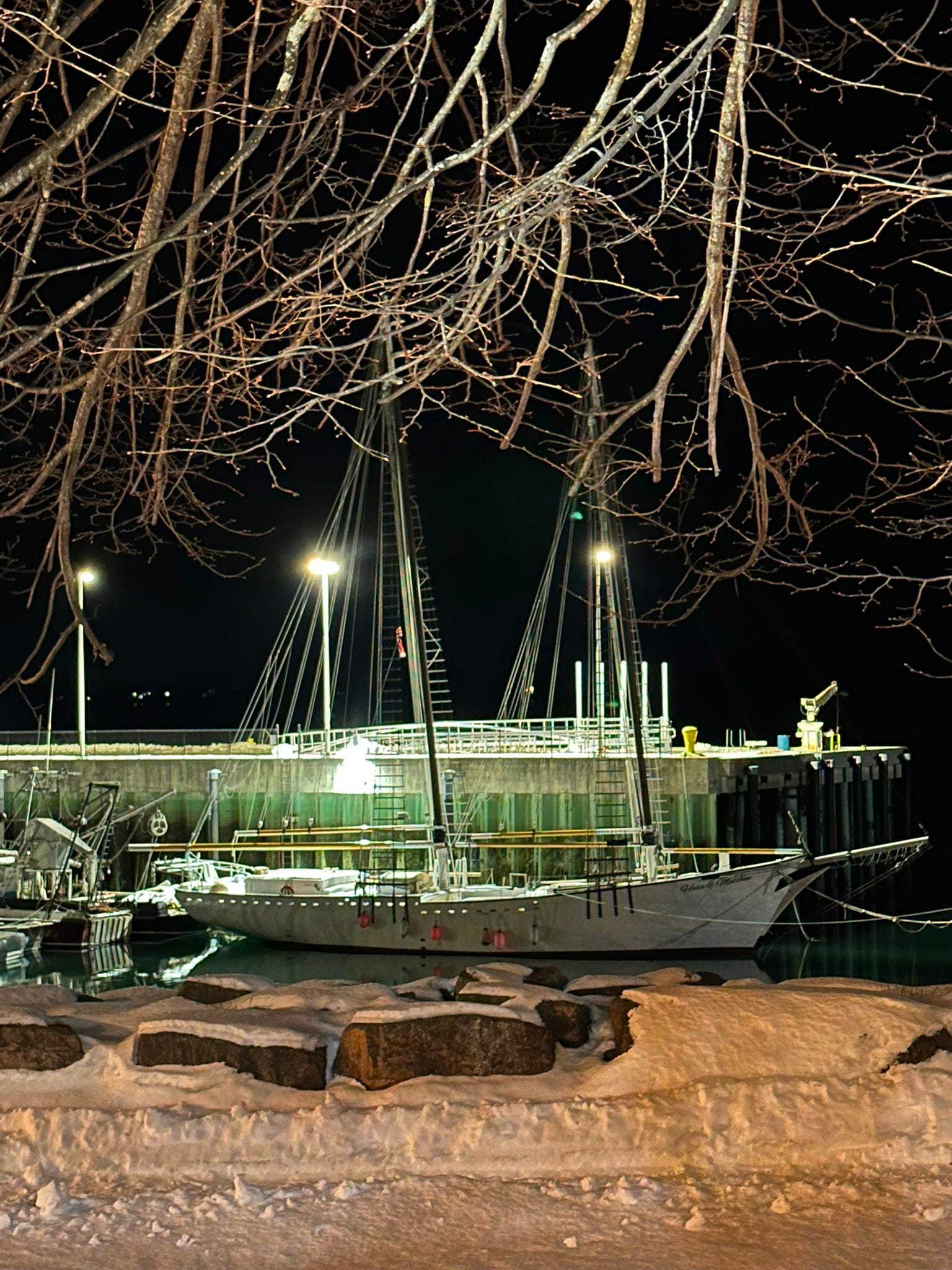
When I parked next to the snow-choked sidewalk, I marveled at the lines of cars because no people walked under the yellow street lights. After admiring a schooner resting in the pier’s stillwater, I leaned into the thick wooden door of the wine bar and stepped into another world. Amid plush armchairs with oiled wood and cascading maidenhair ferns, I inhaled the must of leather bound books. Beyond the racks of wine, a baby grand sat quietly in the corner. But no people.
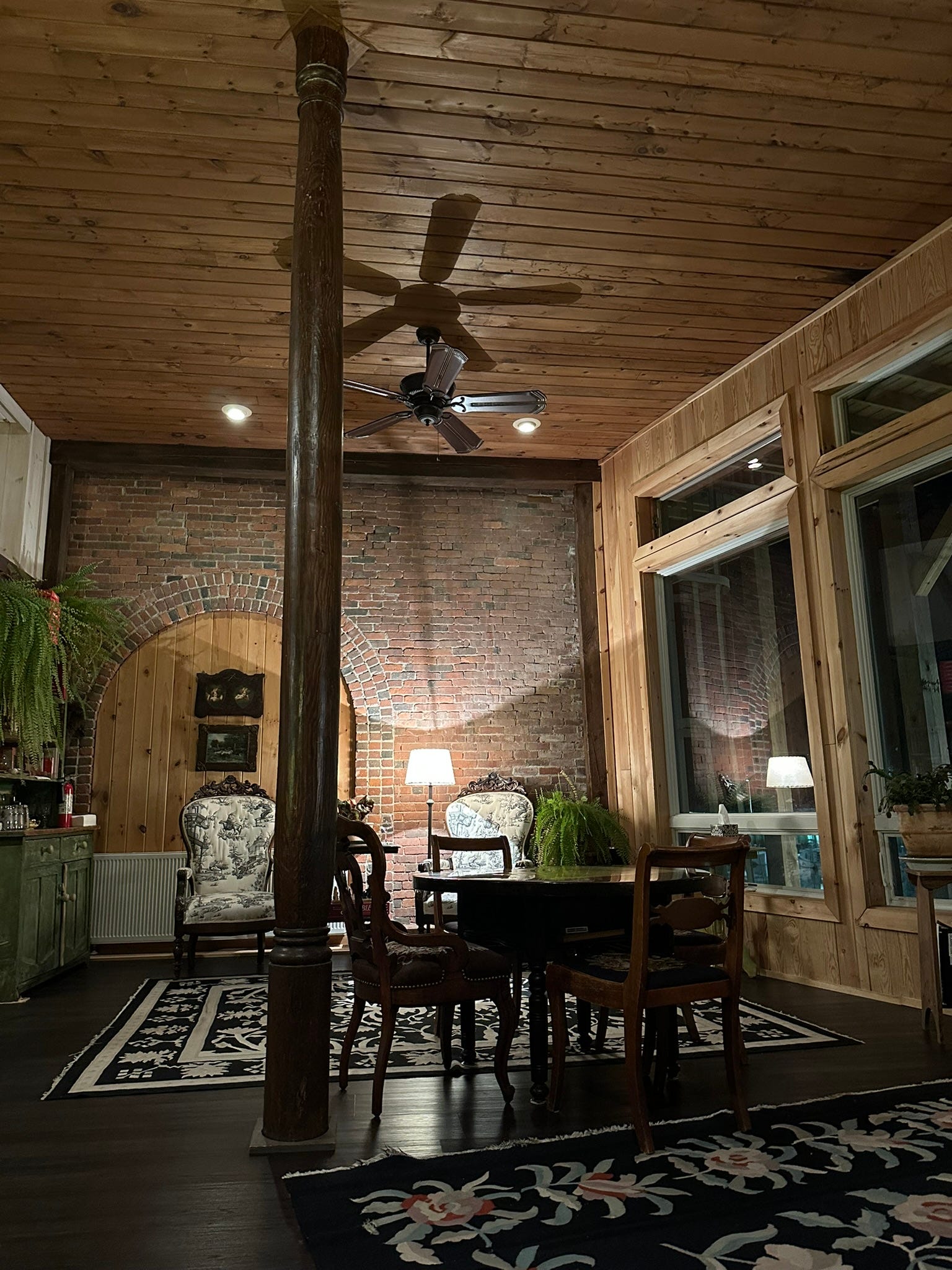
Did I miss it? I followed a lilting voice, then cheers and collective groans, across the wide floor planks to a steep stairway dropping like a companionway into a hull. As I tiptoed down the creaking wood, heat ensconced me, carrying perfume and the smell of hearty food to the thick wooden rafters. I came down the stairs into a room stuffed with people, every seat in the small bar taken. I could not find Jeanne in the crowd, and it wasn’t until the bartender, a beautiful woman with swept back gray hair, asked if I was Jess, and showed me to the corner table, that I scooted out of the friendly but confused gazes of people, most of whom have at least a couple decades on me. Among the winter residents, a stranger was indeed a strange sight.
I don’t remember breathing as I devoured my shepherd’s pie, watching Jeanne’s team consider answers to questions in the category “trains.” That kind of infrastructure feels far from this eastern reach: I drove five and half hours to get here. The city has been hamstrung by the lack of cargo rail for nearly half a century.
****
“Every port needs rail to work,” Jeanne’s husband Bob told me. He is the oldest licensed unlimited ton captain in Maine, and he still pilots the cruise and cargo ships that enter Eastport, though the cargo ships are few and far between these days. Across the world, he has captained oil tankers too large to fit in the Panama canal. As I sipped the coffee he made me the next morning, he told me about picking up a woman from a sailboat whose husband climbed the mast at night during a storm and fell, breaking his back and slipping overboard into the sea. “She was with us for over a week,” he said. “She was really something.” Some cargo ships do not reply to distress calls. But over the years, he has picked up at least twenty people.
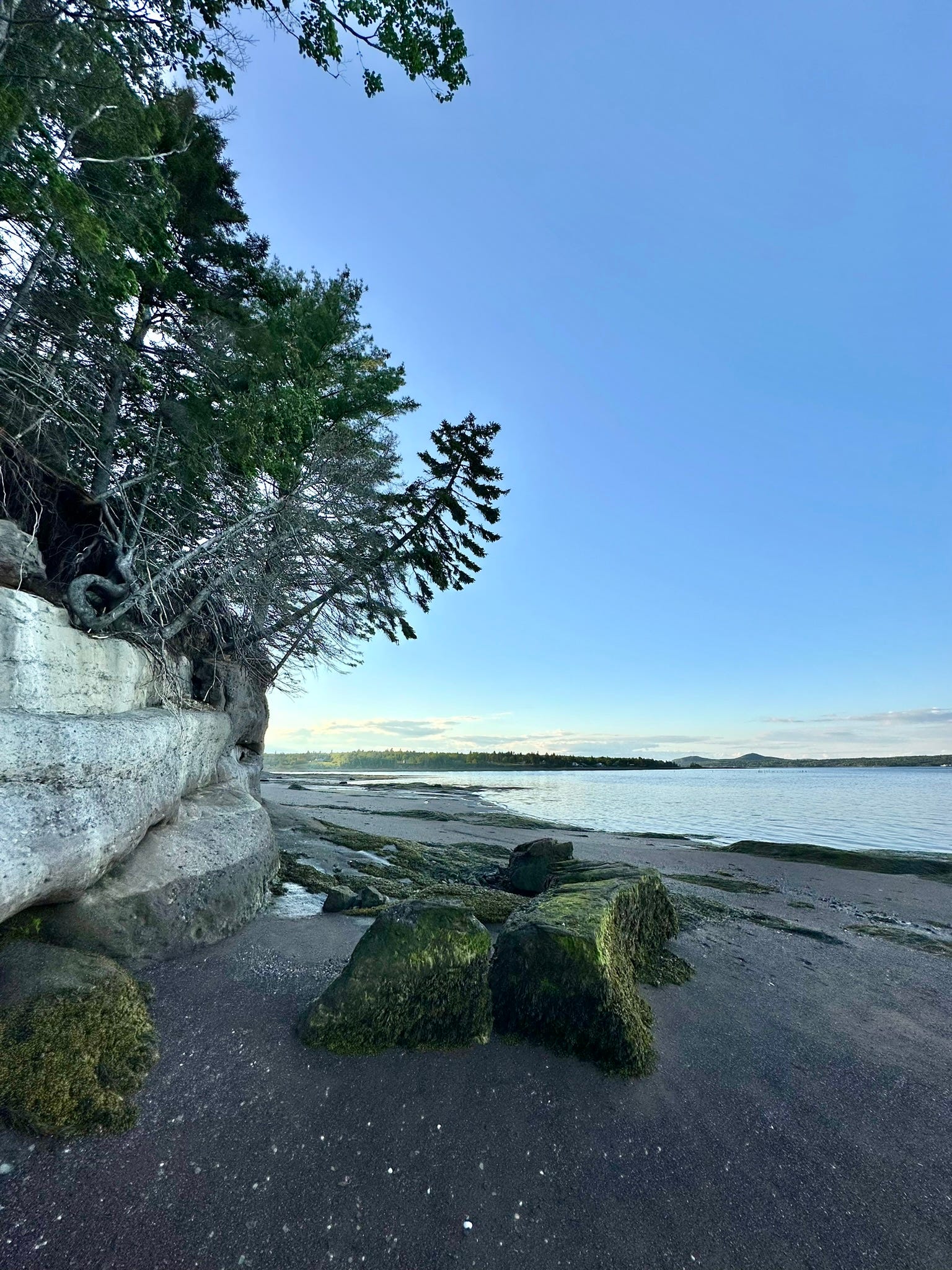
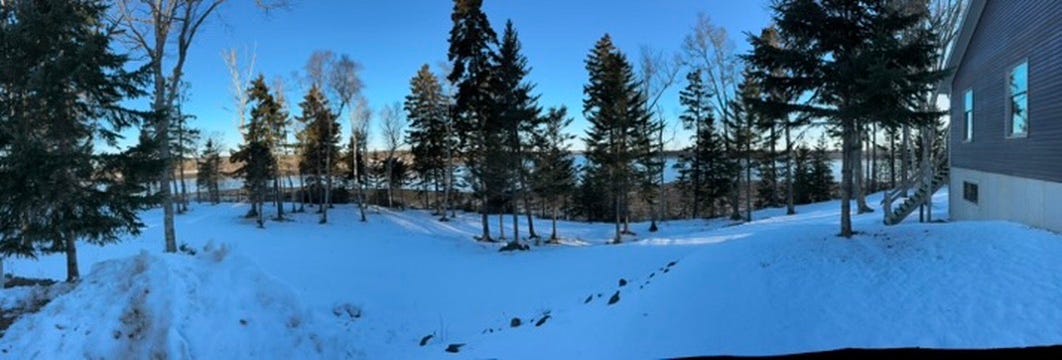
Jeanne and Bob live out of the main town but still on the island, at the end of a spit of land and nearly surrounded by water. “We can see three nations from here,” Jeanne said, pointing through the skinny oaks at the US, Canada and the Passamaquoddy. “Does the tide ever reach your yard?” I asked, eyeing the granite boulders dyed a rusty auburn by silt and rockweed. Jeanne dismissed this the way that my mother does not think about the tide outside her door either: at this point in life, there are other things to worry about. But there’s also a vastness to this land and seascape brought by big tides and nations neighbors. There is enough space for the sea here.
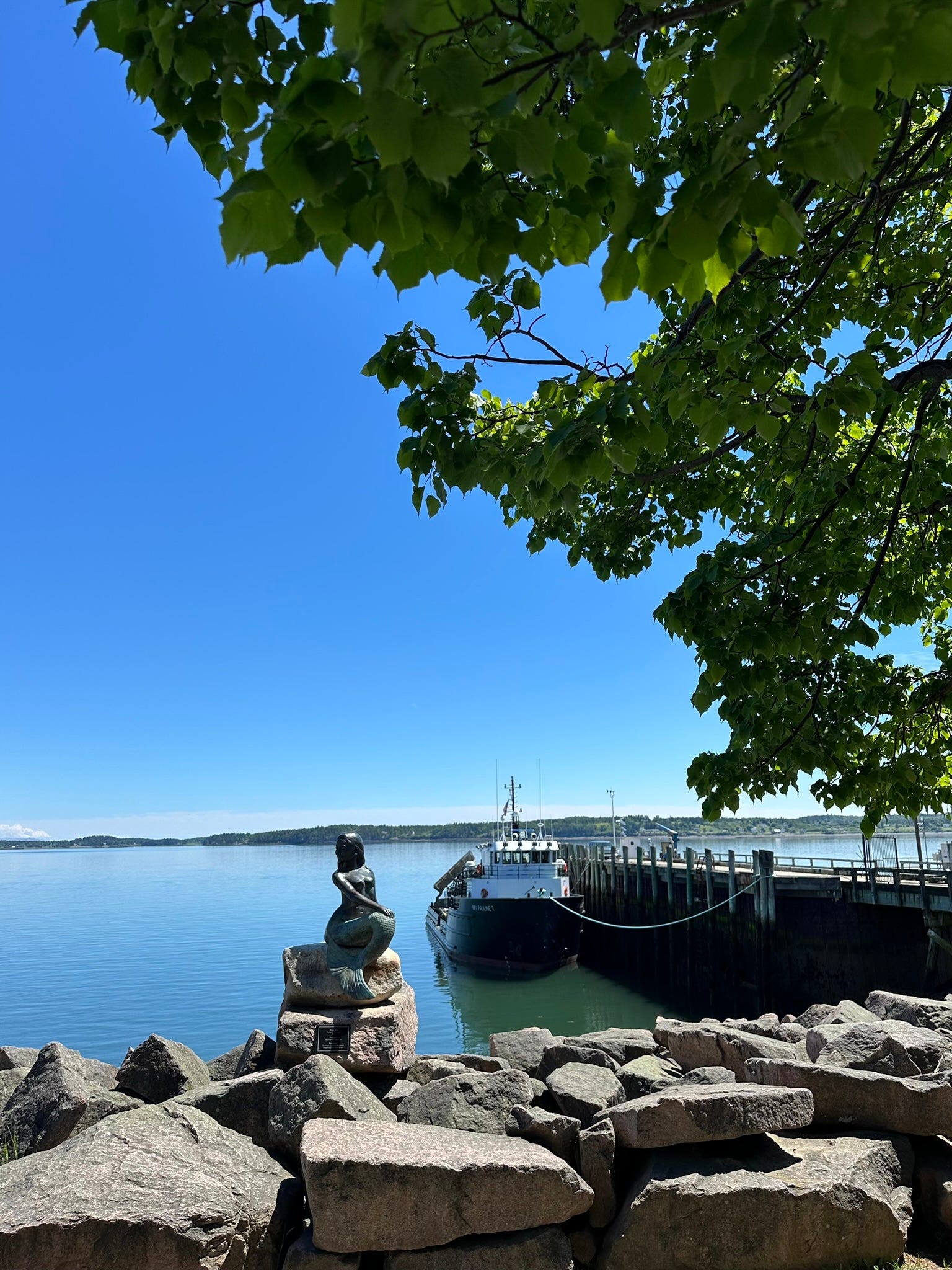
Jeanne and I left Bob to study for his captain’s exam out of a three ring binder that could be used for weight training, and I defrosted the windshield as we headed into the sun and the port authority. Down on the water, we walked past the border patrol SUV and into the sunlit office. Chris, the port captain, shook my hand firmly and met my eye. He operates like a firecracker, bursts of insight that are spectacular to enjoy. The town manager, Brian, in a beautiful cable knit sweater and heavy leather boots, joined us, his jaw set against the demise of his six predecessors in the last seven years. Jeanne hardly said anything, like a sponge at the edge of a counter, absorbing everything, the capacity to clean up many messes within her.
The next two hours unfolded in a raucous conversation that started with specific projects but overflowed into visions of the community and the region, eddying out, as many conversations in rural places do, in keeping the schools open. Chris insisted that everything should ultimately be focused on bringing competent working families to Eastport. Brian shook his head and wondered where the money would come from. But the conversation never turned away from the many projects these local leaders pursue, their dogged imaginations sniffing out new futures.
****
In the wine bar, Jeanne’s team held second place. For the final question, the category was “that didn’t end well.” But before they heard the question, each team of four had to decide how many of their accumulated points they would risk to gain the lead. “I hate this part,” says the person across from me. I slip more shepherd’s pie into my mouth from the cast iron dish and nod. I, too, hate to risk what I have earned.
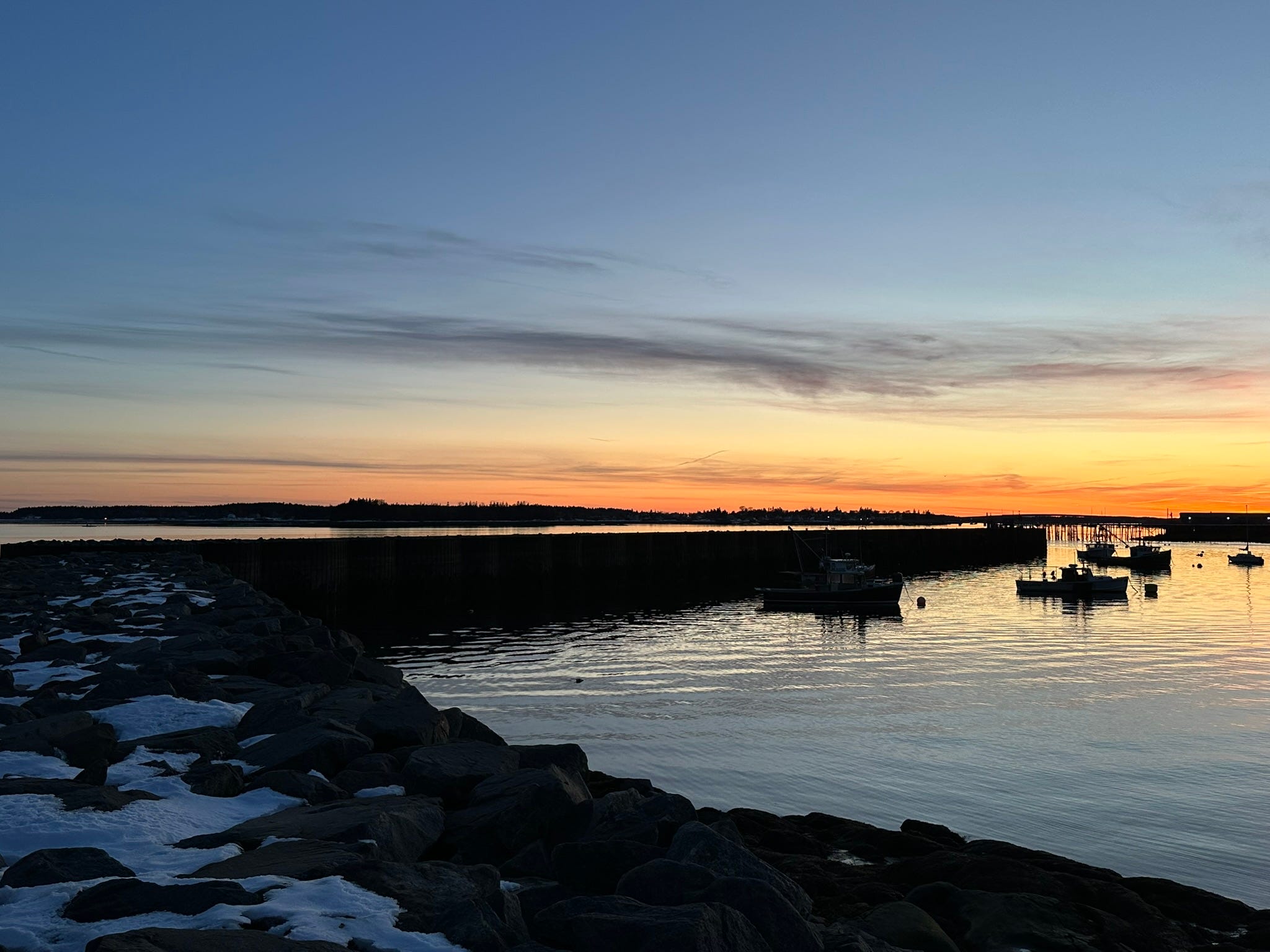
But this kind of risk is customary around here. On my way to Eastport, I stopped in Jonesport, where every building I entered had low ceilings. It doesn’t matter because there is no structure that could match the majesty of Moosabec Reach at sunset, the Beals Island bridge a gracious curve, the fishing boats bobbing behind the breakwater.
I rode out to the site of a future public pier with Kathy, whose car has 231,000 miles on it and who stood on the sun-crusted snow and icy winds in just a sweater and loosely knit scarf. She gazed out over the water with her shoulders relaxed as I talked with their port captain, John. The wind pricked the backs of my knees, and I was grateful for my long down coat.
John grinned when he saw me get out of the car. He looks like my dad, a bit shorter and rounder, the same gregarious and slightly mischievous smile under a mustache that was once brown and blonde now mostly white. Maybe this is why I enjoy spending time with these men of the sea: it is time spent with the father I never got to know as an adult.
As I stood and looked around over the angular ridges of the metal breakwater, the low tide and wrinklers harvesting periwinkles in the dusk behind me, I felt a shiver not from the cold, but the ambition of these two people standing with me. They need big money, but it seems like they could get it because they’re also a port with big landings. As the lobsters scuttle north and east to cooler water, there’s more potential here too. But I can’t help but notice that this is probably a ten year project and the people in charge may not have that kind of time.
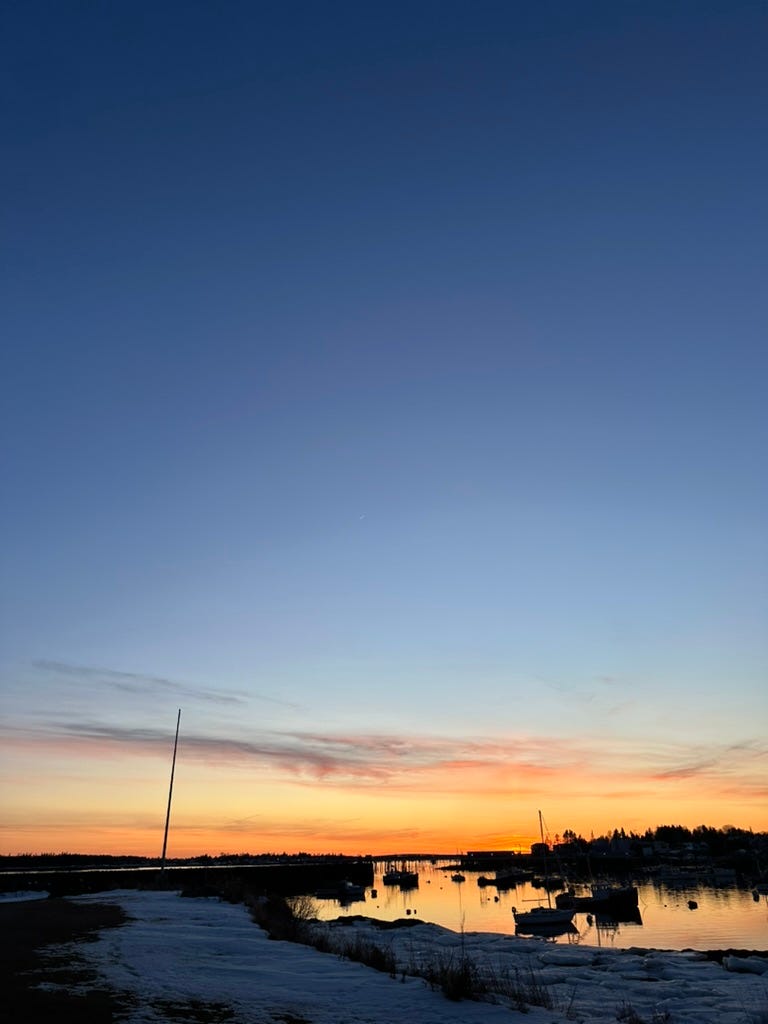
I could see your gears turning, John said with a smile as I sized up the port in the orange sunset, as I thought about how much money this project will cost, how I could help them find the money, how we have to finish it before he dies. My boots rested on the crusty snow as my eyes took in the unbelievable beauty around me, my brain turning over funding pathways. Such a big project. Such a big sky.
How do islands and remote places think about themselves? No man is an island, no town is an island, though it is, and it isn’t. These are the visions that rural places must grapple with: how to hold on, how to let go, how many points to bet in trivia when you don’t know what the question will be. Jeanne’s teammate with the earrings and the beautiful gestures and French accent said they hate this part, they hate figuring out how much to bet. I know that I would hate it too, and it is becoming clear to me that, if you want to win, you have to bet it all.
Jeanne’s team knew the answer–the War of the Roses–but so did the first place team. Jeanne points out that, though they came in second, this elevates their points in the entire winter league. If you have a good team that you trust, and you don’t take yourself too seriously, you can take more risks. I think of Jonesport, two ambitious people in love with a place and learning on the fly how to build great projects. I think of the port captains, grabbing opportunities, making the bet before even knowing the question, nevermind the answer.
Even the wine bar blooms out of that risk. The woman who owns it had to sink an enormous amount of money into restoring it, not knowing how this place will go. And that’s maybe what these far flung places have often done: all chips in. Does it come from the humility of working on the sea? Of knowing the harshness of winter, the brutality of economic downturn? They return, again and again, to visions of spring, even in the depth of winter.
****
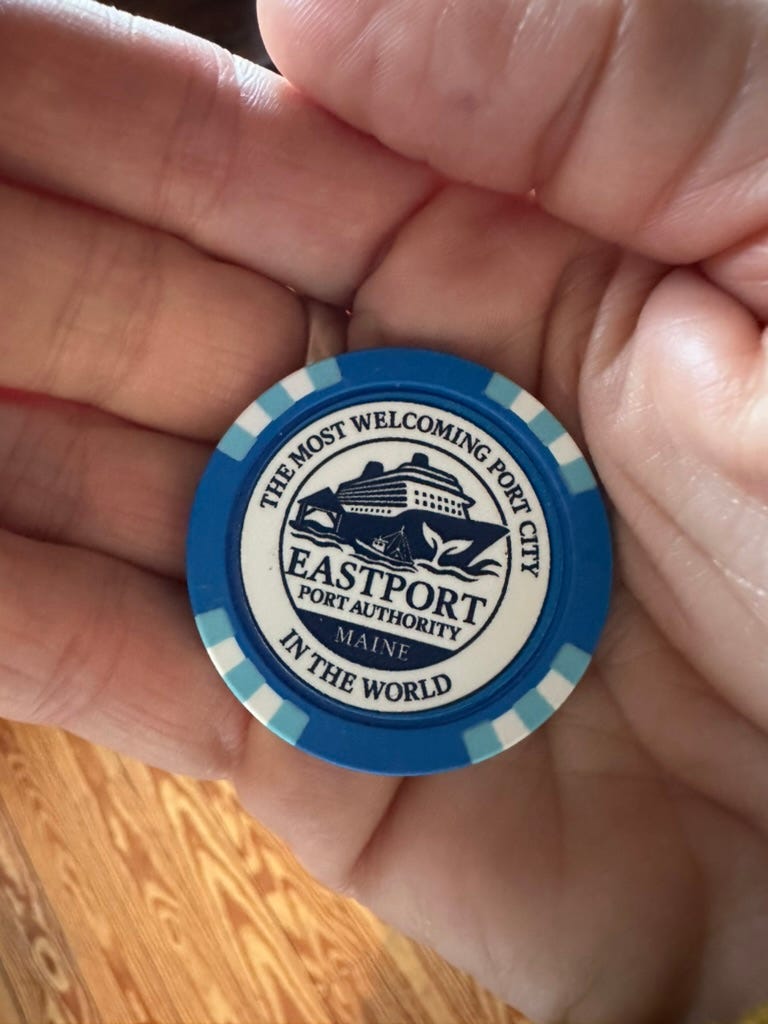
Before I left the Eastport Port Authority office, Chris ran out of the office and returned, placing something small and cool in my palm. He has just told me the story of how the president of Princess Cruises secretly came to Eastport and left calling it “the most welcoming port city in the world.” I looked down in my hand. That phrase, printed next to a ship, skipped around the edges of a custom poker chip.
I just love wine bar and shephard’s pie in the same sentence.